
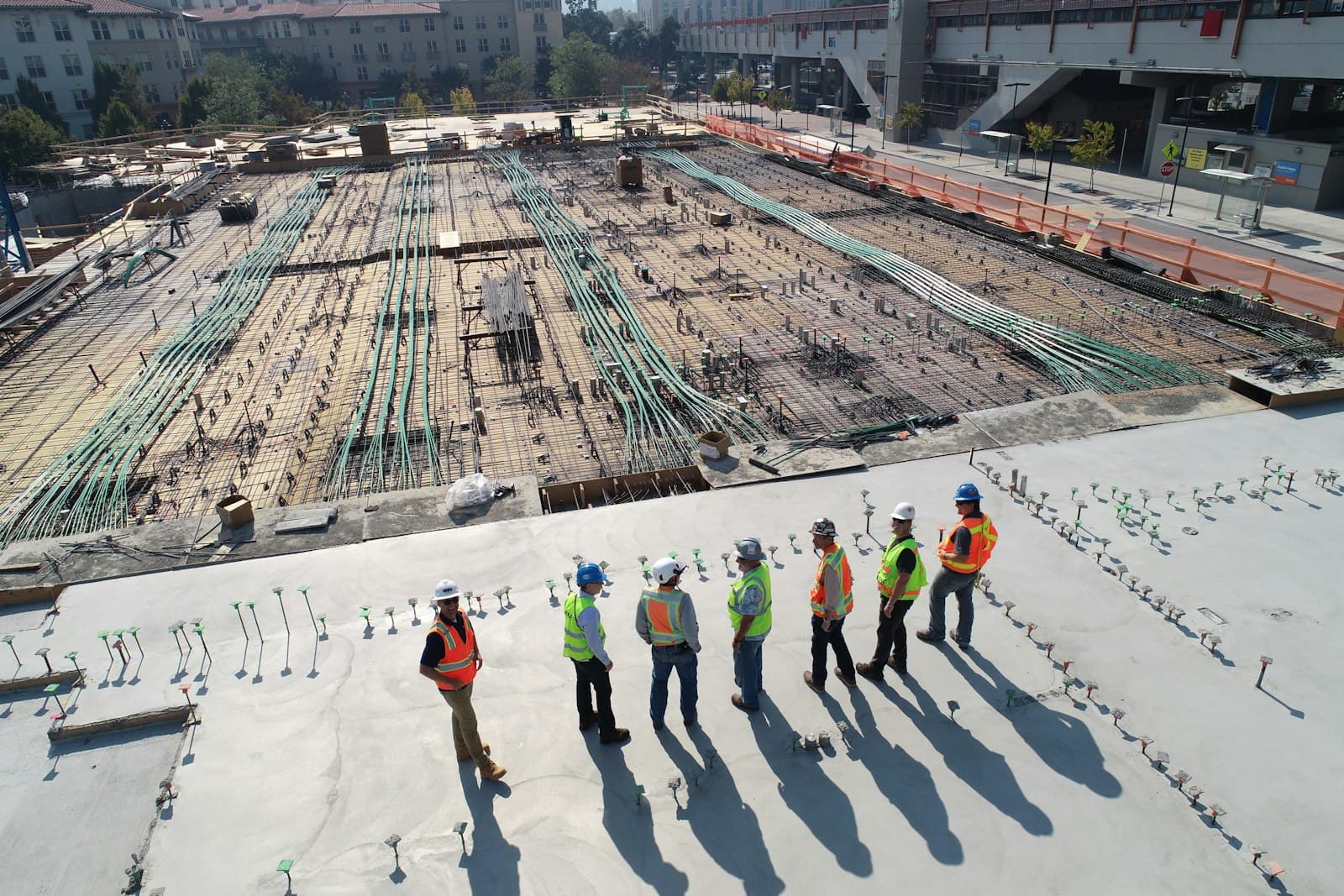
A property development in Australia is financed with a senior construction facility — from a bank, a non-bank lender or a private credit fund — sized against total development cost (TDC), with your equity going in first and the debt drawn down progressively as the build hits certified milestones. Interest is usually capitalised into the facility rather than paid monthly, and the loan is repaid at the end from settlement proceeds, a refinance into a residual stock facility, or both.
That's the one-paragraph answer. The rest of this guide is the detail a credit team will actually hold you to.
What does a development loan actually look like?
It is not a home loan with a bigger number. A construction facility typically runs 12–24 months, is secured by a first registered mortgage over the site, and sits alongside a general security agreement over the borrowing entity — almost always a special purpose vehicle (SPV) set up for the project — plus personal guarantees from the directors. Because the borrower is a company and the purpose is commercial, the loan generally sits outside the National Consumer Credit Protection Act: this is unregulated commercial credit, which is why terms vary so much between lenders and why the structuring matters.
Funds are not advanced in a lump. The lender pays the builder's progress claims after a quantity surveyor (QS) certifies each stage, and the facility limit includes the interest that capitalises along the way. Your equity is spent first — land, then early costs — before the first drawdown.
How much will a lender actually lend?
Lenders size a construction facility under two constraints at once and lend to whichever bites first: loan-to-cost (LTC) and loan-to-gross-realisable-value (LTGRV). As a rule of thumb, banks sit around 60–65% of TDC and roughly 50–55% of end value ex-GST; non-bank and private credit lenders stretch to around 70–80% of TDC and up to 65–70% of GRV. The gap between the loan and TDC is your equity — cash, a site vended in at fair value, or equity in completed stock.
Bank, non-bank or private credit — which lender fits?
Banks (APRA-regulated) are the cheapest money and the strictest credit: full presale cover, fixed-price building contract from an arm's-length builder, demonstrated track record. Non-banks price higher but move faster and live with lower presales, related-party builders and tighter timelines. Private credit funds sit at the top of the range on price and appetite — stretch senior, residual stock, site bridging, deals with a story. None of these is "better"; the right lender is the one whose appetite matches your project's actual risk profile this month.
What role do presales play?
Presales are pre-contracted sales of completed lots, and for many lenders they are the condition that unlocks funding. A bank hurdle might be qualifying presales covering 100% of debt; a non-bank might fund at 50% cover or none, priced accordingly. "Qualifying" matters — arm's-length purchasers, real deposits, no sunset-clause games. A lender who funds with fewer presales is worth real money on holding costs alone, because you start building sooner.
What do you need before you approach a lender?
Four things, in order: site control (owned or under contract, deposit funded), a feasibility that reconciles (hard costs, soft costs, contingency, sales and finance costs — one model, every line sourced), a builder who can be verified (fixed-price contract, completed projects with addresses), and your equity identified and timed. A credit committee runs your deal through exactly this list in the first ten minutes. Turning up without one of the four is the most common reason a fundable project doesn't get funded.
What does development finance cost?
Three components: the rate (banks from the low end, private credit into low double digits), an establishment fee (commonly 1–2% of the facility), and often a line fee on the limit. Because interest capitalises, the real comparison between two offers is total finance cost in the feasibility — a cheaper rate with a slower approval and a higher presale hurdle can cost more than dearer money that starts the build three months earlier.
How long does approval take?
With a complete, reconciled pack: non-bank and private credit terms inside a week or two and settlement in four to eight weeks; banks longer, mostly on valuation and presale verification. The variable isn't the lender's speed — it's whether the brief answers credit's questions before they're asked.
That last part is the job. We structure the deal, match it to the lender whose appetite actually fits, and stay in the file until it settles. If you've got a site and a feasibility, the first call takes twenty minutes and you'll come away knowing whether it's fundable and at what leverage.